How to Protect a Child’s Singing Voice: What Parents and Voice Teachers Need to Know

Updated: Sep 4

Understanding how children’s voices develop, why adult techniques can be risky, and how to support young singers safely
Children love to sing. Singing is instinctive, joyful, and helps us to express ourselves. For parents, it can be thrilling to hear a child sing confidently or show unusual musical ability. For teachers, working with young voices can be rewarding and inspiring.
However, a child’s singing voice is still under construction. Unlike adult voices, children’s voices are not fully formed. The structures that allow adults to sing powerfully, for long periods, and with a wide range of expression develop slowly over many years. When those structures are pushed before they are ready, problems can arise.
Protecting children’s voices is not about holding talented children back. It is about allowing the voice to grow in a healthy, sustainable way.
How the Voice Produces Sound

A Simple Explanation of the Vocal Folds
Inside the throat is a structure called the larynx, often referred to as the voice box. Within the larynx are two small bands of tissue called the vocal folds. When we breathe out, air passes between them. When we speak or sing, the vocal folds come together and vibrate, creating sound.
In adults, the vocal folds have a complex internal structure that allows them to vibrate efficiently under many different conditions, including loud singing, high notes, and sustained phrases. In children, that structure is not yet complete.

The Developing Vocal Folds Explained
The vocal folds are made up of several layers of tissue. In adults, these layers each have a specific role. Some layers are soft and flexible, allowing easy vibration. Others are stronger and provide support and stability.
In children, this layered system is not fully formed. At birth and in early childhood, the vocal folds are made mostly of one relatively uniform layer of soft tissue. This tissue is very flexible but also fragile. It does not yet have the internal reinforcement that allows adult voices to cope with sustained pressure or intensity.
As children grow, the vocal folds slowly begin to organise themselves into distinct layers. This process happens gradually throughout childhood and adolescence and is influenced by growth, hormones, and healthy vocal use.
This means that children’s voices:
Tire more easily
Are more sensitive to strain
Do not tolerate prolonged loud or forceful singing well
Why This Matters for Singing Lessons

When someone sings with strength and power, in the extremities of the vocal range, or sings for a long period of time, the vocal folds experience what scientists call vocal load. This includes physical pressure, repeated impact, and muscular effort. Adult vocal folds are designed to manage this load when used with good technique. Children’s vocal folds are not.
If a child repeatedly sings with too much force, too much volume, or for too long without adequate rest, the delicate tissue of the vocal folds can become irritated or swollen. Over time, this can lead to hoarseness, vocal fatigue, inefficient habits that are difficult to unlearn later, and damage to the vocal folds.
This is why children need different expectations, different repertoire, and different teaching approaches from adults.
Why Some Songs Are Unsafe for Young Voices

Adult Repertoire and Vocal Demands
Many songs written for adults assume a fully developed voice. Operatic arias, power ballads, and belt-heavy musical theatre songs often require:
Sustained loud singing
High breath pressure
Strong vocal fold closure
Long phrases with little rest
For an adult voice, these demands can be managed with training. For a child’s voice, they can be too much. Even if a child can produce the sound in a way that sounds mature or powerful, that does not mean the voice is coping well internally. Children are often very good at compensating, using extra tension in the throat, jaw, or neck to achieve a desired result. These compensations can mask strain while creating long-term problems.
The Myth of the “Young Opera Singer”
A mature operatic sound relies on several physical factors that children do not yet have.
The larynx continues to change position as a child grows, especially during puberty. The shape of the face and skull, which affects resonance, also continues to develop. The vocal folds themselves lack the internal structure needed for sustained vibrato and vocal stamina.
When children are encouraged to sing like adults, they are often imitating the sound without the physical foundations that support it. This is why professional opera singers usually do not begin serious operatic training until adulthood. Their voices are allowed to grow before being asked to carry heavy musical demands.
Additionally, as a lot of operatic repertoire is "standard" repertoire they may sing for many years into the future, singing with the capabilities of a child before they are vocally mature can mean that this repertoire becomes challenging or impossible to sing later in life. This can be simply due to the physical development of the vocal tract, or due to bad technical habits which become too difficult to unravel.
The Child Prodigy Phenomenon
Audiences are often impressed by children who sound “older than their age”. While this can be exciting, it can also create unrealistic expectations.
Many child singers who experience early success do not continue singing at the same level as adults. Some experience vocal difficulties. Others lose confidence when their voice changes. Some simply stop enjoying singing after years of pressure. Early ability is not a guarantee of long-term vocal health or career success.
A well-known example is Charlotte Church. Charlotte became famous as a child for singing demanding classical crossover repertoire. She performed extensively throughout her teenage years, including music normally sung by fully developed adult voices. Church herself has spoken about how various factors affected her voice over time. Vocal professionals often cite her career as an example of why caution is needed when young voices are exposed to heavy workloads too early. Her experience highlights the importance of pacing, appropriate repertoire, and long-term thinking.
Choosing Safe and Supportive Repertoire

What Makes Repertoire Age-Appropriate
For children, good repertoire should:
Sit comfortably within a limited vocal range
Follow the tendencies of their developing voices (higher/lower tessitura depending on the voice, encouraging flexible voice use and healthy expression)
Avoid sustained loud singing or heavy belting
Allow frequent breathing and vocal rest
Encourage clear, easy tone production
Feel enjoyable rather than stressful
There is a wealth of beautiful music written specifically for children’s voices or which is appropriate to be sung by developing voices. Folk songs, children’s art songs and musical theatre excerpts, some pop songs, and ensemble repertoire are a good place to start. Stage roles such as Annie, Matilda, and Gavroche are typically only performed by young singers, so make the most of these!
Emotional Understanding and Expression
Children also need repertoire they can understand emotionally. Singing is an expressive art form, not just a technical one. When children sing about experiences far beyond their own lived understanding, performances often become imitative rather than genuinely expressive.
Some teachers choose to adapt the meaning of a song, helping a child relate adult themes to experiences they do recognise. When done thoughtfully, this approach can work. The aim is always authentic expression, not the imitation of adult emotions or gestures.
However, there is also great value in simply waiting. There is an enormous wealth of musically rich, age-appropriate repertoire available to young singers. Choosing to delay certain songs is not a loss. Many works gain their depth and emotional resonance only when a singer has the life experience to meet them fully.
A good example comes from Kristin Chenoweth, speaking about the song My Coloring Book during a live performance. Recalling her time as a student, she shared the following:
"I went to Oklahoma City University, and I met the woman that would change my life: my singing life, my heart... and I pulled out this sheet of music that I wanted to do in masterclass, stood up there and began to sing, and after the first line she said 'Oh, I'm going to have to stop you. You see, you don't understand what you're singing about. One day, when you do, I welcome you to pull it out again and try it. But don't do it 'til you understand it'."
Chenoweth then explained that her teacher was present in the audience that night:
"Miss Birdwell, I brought it. I brought the song. I think I've got it now."
This story illustrates a core principle of both vocal and artistic development. Some repertoire is not meant to be rushed. Allowing a singer to grow into a song respects both the voice and the person behind it.
In the context of teaching children, patience is not avoidance. It is a deliberate, informed choice that protects authenticity, depth, and long-term artistic growth.
Why Music Written for Children Is So Important
Music composed specifically for children respects where the voice is developmentally. Composers such as Benjamin Britten, along with many choral and educational composers, understood/understand how to write music that supports healthy vocal use.
This repertoire allows children to sound like themselves. It builds musicianship, confidence, and technical foundations without asking the voice to do work it is not ready for.
Recorded vs. Live Singing: Why the Difference Matters for Children
It is essential for children to understand the difference between recorded or amplified singing and unamplified, unaltered live singing. Much of the music children listen to today has been heavily processed. Vocals are often pitch-corrected, layered, equalised, compressed, and edited. Breaths are removed, multiple takes are combined, and harmonies may be added that no single voice is producing in real time.
Children are rarely aware of these processes. When they try to imitate their favourite singers, they are often attempting to recreate a sound that does not exist naturally in the body. This can lead to frustration, confusion around pitch and tone, and the development of inefficient vocal habits as they push their voices to match an artificial standard.
This issue is not limited to commercial recordings. Much of what is presented as “live” singing on social media, including content shared by self-proclaimed voice coaches - yes, even the most famous ones - is frequently filtered or subtly altered. For developing singers, this blurs the line between what is technically possible and what is digitally enhanced.
Regular exposure to genuine live singing, both in person and through unedited recordings, helps children develop a more accurate ear and a realistic sense of vocal production. Hearing real voices in real spaces supports healthy imitation, grounded expectations, and a clearer understanding of what the human voice can actually do.
When Should Children Start Singing Lessons?

A Developmentally Sensitive Approach
Many voice specialists recommend delaying intensive, technique-focused one-to-one vocal training until the early teenage years, often around age 12 for many girls and 14 to 15 for many boys. These guidelines reflect the fact that the vocal folds and supporting systems continue to develop throughout childhood and adolescence.
However, children develop at different rates, both vocally and personally. Some show clear musical aptitude, coordination, focus, and responsiveness from a young age, and parents may want to ensure that these traits are nurtured. Starting lessons early, regardless of natural ability, can be beneficial for overall musicianship and potential professional careers, provided the approach supports healthy development rather than rushing vocal outcomes.
Before adolescence, most children benefit from work that prioritises musicianship over vocal intensity, including:
Group singing and ensemble work
Musical games and exploration
Pitch and rhythm development
In my own voice teaching practice, I work with children from early childhood on musicianship, the elements of music (integrated music theory), vocal and musical exploration, and the foundations of healthy technique through developmentally-appropriate repertoire. More repertoire-focused work begins from around age 10. Technical demands are introduced gradually as the child matures, allowing skills and confidence to develop alongside the voice itself.
Starting early is not the issue. What matters is that training respects the child’s stage of development and grows with them over time.
What Healthy Singing Lessons Look Like for Children
Effective singing lessons for young voices should:
Be relatively short and varied
Balance singing with movement, listening, play, and development of musicianship skills
Avoid constant repetition of demanding passages
Focus on ease, freedom, and enjoyment
Watch closely for signs of vocal or physical tension
A child should leave a lesson feeling energised, not vocally tired or strained.
The Role of Parents in Protecting Young Voices
Parents are key advocates for their children’s vocal health. This includes choosing teachers who understand child vocal development, monitoring how often a child performs, and being willing to say no to inappropriate opportunities.
High-profile young singers often rely on careful scheduling, vocal rest, and professional guidance to protect their voices. While most children are not performing at that level, the principle is the same: Long-term health matters more than short-term success.
Supporting Voices for a Lifetime
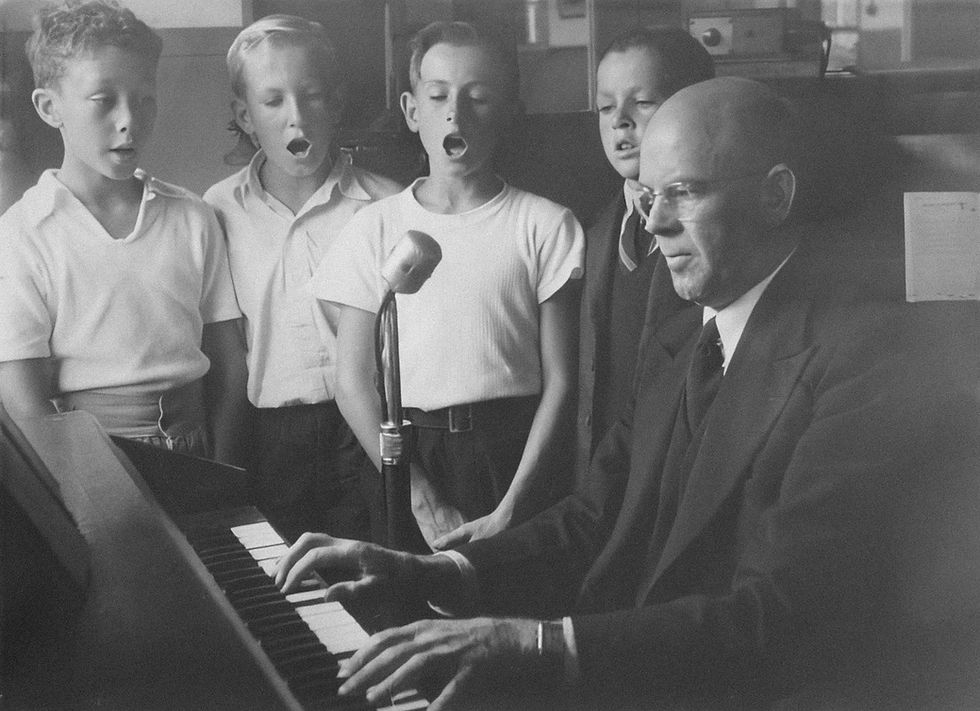
The purpose of teaching children to sing is not to rush them toward adult goals. It is to support healthy growth, strong musicianship, and a positive relationship with singing. Singing itself supports vocal development when it is done easily and appropriately. Forcing the voice, singing too loudly or too often, or working beyond a child’s physical limits can interfere with that process.
Children’s voices need time. With patience, informed teaching, and thoughtful support, the voice they are meant to have will emerge naturally. Protecting children’s voices means thinking ahead, respecting development, and valuing health over hype.



Comments