Voice Work for Religious Trauma Recovery: Paris & Online Sessions


Somatic voice and stagecraft practices to complement your healing journey from high-control religious environments
Leaving a high-control religious environment is rarely (if ever!) a smooth process. For many people, religious deconstruction brings grief, fear, confusion, anger, relief, and profound nervous system dysregulation, often all at once. Some people sever all ties with their former belief system or community; others remain connected in partial, evolving, or conflicted ways. There is no single, correct path.
If you were raised in, or became deeply invested in, these environments, you were likely taught (explicitly or implicitly) that speaking up is dangerous, that authority should not be questioned, and that your own body, instincts, or inner responses cannot be trusted. These messages are often framed as virtue, humility, or faithfulness, which makes them particularly difficult to identify and undo. They do not disappear simply because beliefs change.
When how you are allowed to think, behave, sound, and express yourself is tightly controlled, the body adapts in order to survive. The voice is often one of the places where this adaptation is held. Over time it can feel locked or muted - a container for unexpressed emotion, unspoken thoughts and opinions, suppressed anger or pain, and a constant undercurrent of anxiety.
The good news is that as awareness of religious trauma and high-control systems continues to grow, so too does our understanding of how people can navigate recovery. The arts, including voice and embodied practices, are increasingly recognised as effective ways of reconnecting with oneself after prolonged suppression. They offer a means of engaging the body directly, helping previously fragmented or guarded systems to begin communicating again, at a pace that supports safety rather than overwhelm.
About Me
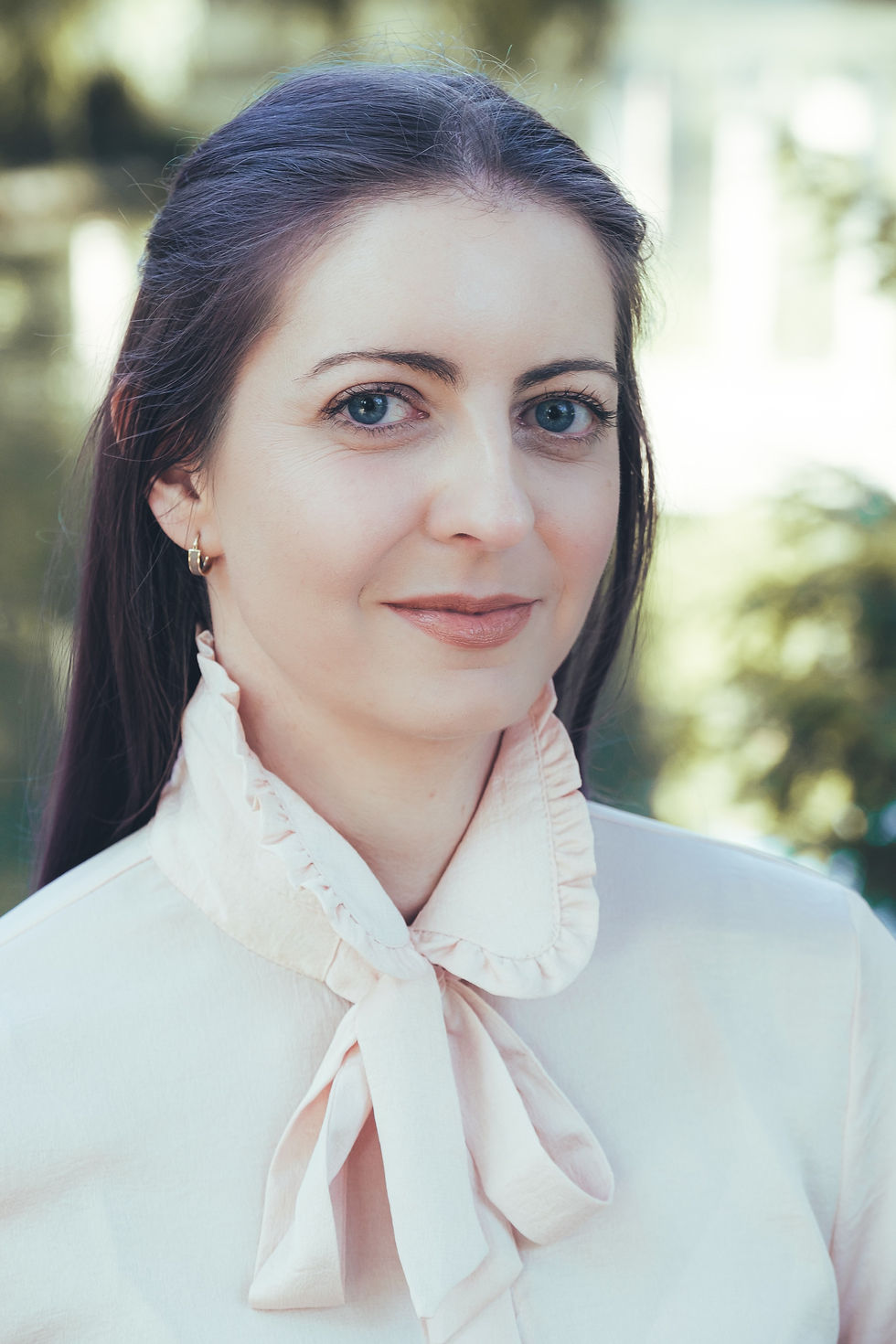
My name is Kayla Collingwood. I am a classical singer and voice, stagecraft, and music educator based in Paris, France, working both in person and online.
I write this work from lived experience as well as professional practice. I went through (and continue to process) my own journey of religious deconstruction alongside intensive therapy, as I dismantled much of what I had previously understood about myself, my body, and the world around me. Like many people navigating deconstruction, this process involved grief, disorientation, fear, and the slow rebuilding of trust in my own perceptions and responses.
Through both my own healing and my work with students, I have seen how life experience shows up in the voice in very concrete ways, through the breath, resistance to expressing authentic emotion, tears and yawns, and what are often labelled as "technical" vocal blocks.
My work sits at the intersection of voice, embodiment, and trauma-informed education, drawing on classical vocal training, theatre studies (including somatic body and voicework methods), and ongoing trauma-aware learning.
Understanding Religious Trauma and Vocal Expression

Religious trauma commonly develops in high-control systems where questioning is discouraged, obedience is moralised, and dissent is framed as danger, rebellion, or failure. When assessed medically, it often shows up as (complex) PTSD, OCD, BPD, anxiety, and other trauma-related diagnoses. These dynamics appear across many religious and spiritual traditions, even when the language and theology differ.
People often internalise beliefs such as:
“Being heard is dangerous”
“My needs and opinions matter less than authority”
“Silence equals safety”
“Self-expression is selfish, sinful, or prideful”
For many, this conditioning begins in childhood. Authoritarian parenting styles within religious frameworks frequently weaponise belief, demanding immediate obedience, emotional suppression, self-denial ("dying to the self"), and strict behavioural control. Even where parents had the best of intentions and thought they were doing the right thing, the child learns very early that safety, love, and belonging are conditional.
Over time, these messages move beyond belief and into the body. The nervous system adapts. The voice adapts. Voice is both physiological and psychological. It reflects how safe we feel to exist, to take up space, and to be heard without punishment, shame, or withdrawal of belonging.
People leaving these environments often notice patterns such as:
restricted or shallow breathing
reduced vocal intensity or range
careful, restrained, or monotone speech
a sense that their authentic voice is unsafe
fear around being seen, heard, or fully present
These are survival adaptations. They are not personal failures, and they are not signs that something is wrong with you.
How Religious Trauma Affects Your Voice and Body

The nervous system learns through repetition and consequence. When speaking out led to abusive punishments, exclusion, or shame, the body learned to associate voice with danger.
For many people navigating religious deconstruction, vocal expression feels disproportionately vulnerable. Even in environments that are objectively safe, the body may still respond as though it is not. This can show up as freezing, tension, nausea, panic, a sense of disconnection from sound altogether, and other physical responses.
This is also why many people leaving religion feel conflicted about therapy, somatic work, or creative practices. High-control systems often teach distrust of secular support, outside authority, or embodied approaches. Even when help is desired, fear, guilt, or suspicion may still be present. Voice teachers can also be viewed with distrust, as those in positions of knowledge "above" you may have caused so much harm.
Technical vocal advice alone is rarely sufficient in these cases. Vocal freedom depends on a sense of safety in the body. When protective patterns are still active, the voice cannot simply be "trained" into openness.
What Is Voice & Stagecraft for Wellbeing?

Voice & Stagecraft for Wellbeing grew out of my training in classical singing and theatre, where sustained attention is given to breath, physical awareness, movement, presence, attention, engagement, analysis, and expressive choice.
These tools are often associated with performance, but they are not inherently about performing. They are ways of working with the body and voice that support regulation, communication, and agency in everyday life.
This work adapts those tools for people who want to explore voice as a means of reconnecting with themselves, rather than as a skill to perfect or present. It is not about fixing your voice or learning how to perform. It is about creating a supportive, bounded space in which your mind, body, and voice can rediscover choice, agency, and freedom, without pressure, judgement, or spiritual framing.
Important note: This work is not psychotherapy or clinical treatment. I am a voice and stagecraft educator with trauma-informed training, not (yet) a licensed therapist. Voice & Stagecraft for Wellbeing is designed to complement therapeutic support, not replace it.
What We Focus On
In trauma-informed voice and stagecraft sessions, we work with:
Bodily awareness and nervous system regulation. Learning to recognise what safety feels like in your body, and working within your individual capacity and boundaries.
Breath as a foundation. Not forcing the breath into submission, but learning to relate to the respiratory system as something which is there to support us.
Choice and agency. Giving yourself permission to explore vocal expression without judgement, expectation, or performance pressure.
Embodied exploration. Discovering sounds, movements, and forms of expression you may never have felt able to access before.
Voice exploration in this context is a somatic, expressive practice. It honours lived experience and offers practical tools to reconnect with your body and voice in ways that feel empowering, grounded, and manageable.
What a Session Might Include
Each session responds to where you are physically, emotionally, and energetically on the day. The work may be gentle at times, and it may also be intense.
As trust, capacity, and readiness develop, sessions can include a broad range of vocal and embodied exploration, from quiet, contained work to louder, more expansive, or unfamiliar forms of expression. Nothing is forced, but expression is not artificially limited. We follow what is available, workable, and appropriate in the moment.
Sessions may include:
Vocal exploration: Working with sound in many forms, from humming and sighing to fuller, louder, or less “polished” sounds. We may explore vocal qualities that have previously felt unsafe, inaccessible, or socially unacceptable, always within your capacity and with clear consent.
Vocal understanding: Developing an understanding of how the voice functions and the systems involved, and gradually building coordination, skill, and clarity without overriding the body’s protective responses.
Movement and embodiment work: Using the whole body to support and free the voice, rather than isolating it. This may include characterisation, physical exploration, music making with instruments or objects, and engagement with concepts drawn from theatre practitioners such as Stanislavski, Laban, and Grotowski.
Breath work: Relating to the breath as a supportive resource rather than something to control. This may be subtle and settling, or more dynamic and activating, depending on what the work requires.
Creative improvisation: Exploring sound, musical elements, text, and expression through structured and open improvisation, with an emphasis on choice, responsiveness, and curiosity rather than performance.
Set works: Alongside exploratory and improvised work, we use set texts, songs, or other structured material to apply what we are developing to something concrete. This can provide a clear context in which to practise new patterns of expression.
Reflection and integration: Taking time to notice what arises, make sense of it, and integrate the experience at your own pace.
We always work at your pace. If something feels like too much, we adjust. If you need to pause, we pause. The aim is not to push through discomfort or manufacture emotional release, but to build sustainable patterns of safety, choice, and self-trust - including the capacity to express strength, intensity, and volume when it feels right.
Why This Work Matters for Religious Deconstruction

When belief systems have shaped not only what you are allowed to believe, but how you are allowed to sound, reconnecting with your voice can feel like reclaiming a part of yourself that was set aside for safety.
For many people leaving high-control religious environments, deconstruction is not only an intellectual process. It is a physiological one. The body often continues to respond according to old rules long after belief has shifted. Silence, compliance, and self-monitoring may still feel safer than expression, even when those patterns no longer reflect who you are or what you value.
Voice and stagecraft work offers a way to engage with this process from the inside out. It creates space to notice patterns without shame, to think and respond more analytically rather than through reflexive self-censorship, and to practise making choices in real time. Over time, the voice can begin to reflect who you are becoming, rather than who you were required to be.
When to seek additional support: If you are experiencing severe anxiety, depression, PTSD symptoms, suicidal thoughts, or other mental health concerns, please prioritise working with a licensed therapist or mental health professional.
Getting Started: Simple Practices for Today
You don't need to be "ready". You can begin with small, safe steps right now:
4-7-8 breathing exercise: Inhale for 4 counts, hold for 7 counts, exhale for 8 counts
Explore simple sounds - humming, sighing, gentle vocalisation
Tune into physical sensations in your body. What activation can you feel in your body when you take a breath and prepare to speak or sing?
Book a Voice & Stagecraft for Wellbeing Lesson in Paris or Online
This work is designed to complement mental health treatment, not replace it. If you are currently experiencing severe dysregulation, active crisis, or acute mental health symptoms, please work with a licensed therapist or mental health professional first. Depending on where you are in your healing journey, I may suggest a brief initial consultation at no cost to discuss whether this work is appropriate for you right now.
Session Details
Available formats:
In-person in Paris/Val-De-Marne
Online worldwide via video call
Individual sessions (most common)
Small group sessions (occasionally available)
Languages: English or French
Booking: Sessions are typically booked in flexible packages of 5 or 10. One-off trial sessions are also available. Current rates listed on my teaching page.
Ready to begin? Learn more about my teaching and submit an enquiry
Learn More
Want to understand the research behind this work? Read my comprehensive post Religious Trauma and the Voice for an in-depth exploration of how high-control beliefs shape vocal expression.
Curious about the broader approach? Read about my Voice/Stagecraft for Wellbeing practice and how it supports overall wellbeing.


Comments